
Most conversations about Australia's environment focus on fossil fuels, electric cars and managing waste. When we discovered that what's on our plate matters just as much, we were compelled to offer a solution.
Food, and specifically the overconsumption of animal-based protein, is the single biggest lever most of us have over our personal environmental footprint, and same goes for large institutions. The evidence is clear: the way Australia produces and eats meat is reshaping our land, water, climate and forests. Not for the better.
Why we give a F**k


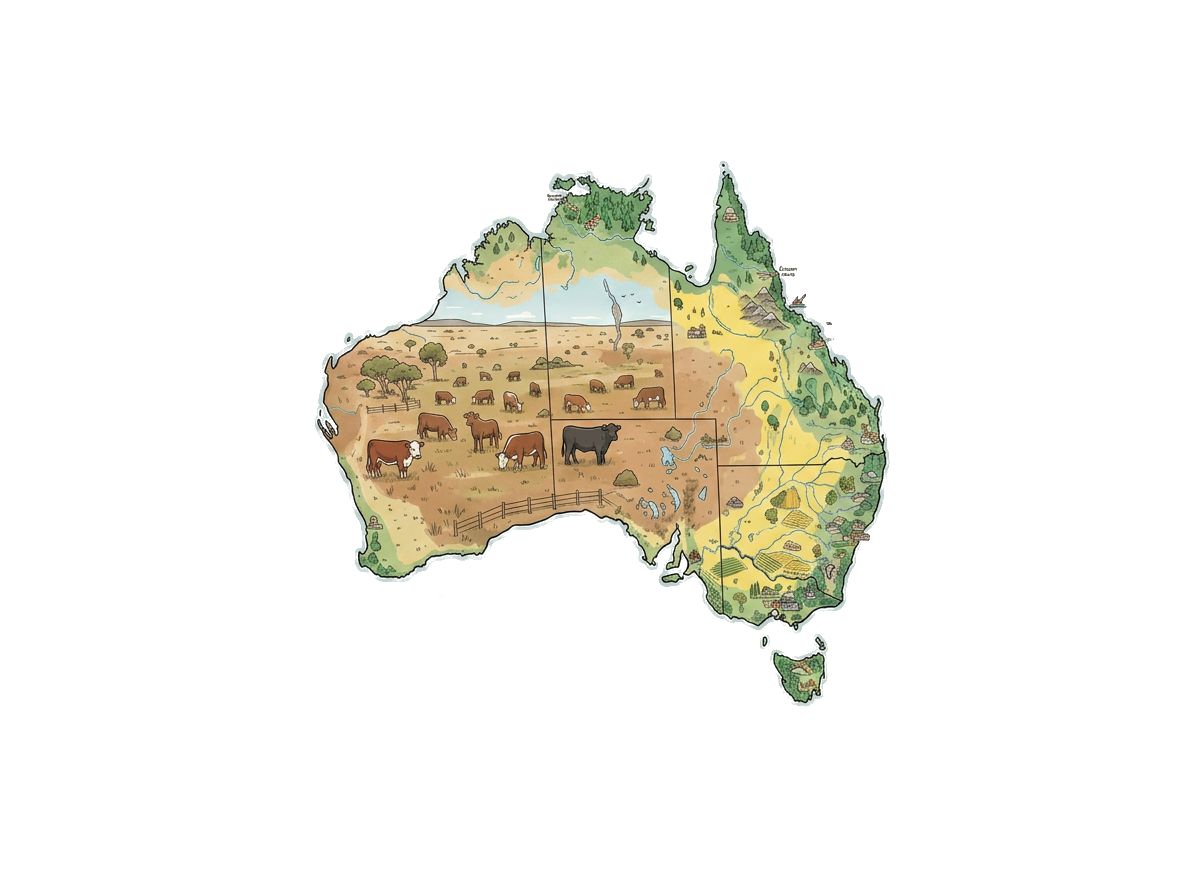
Raising cows and sheep for meat takes up more than half of Australia's landmass.
Livestock grazing is Australia's single largest land use, covering 54% of the continent, more land than the size of India.
Source: ABARES, Land Use in Australia at a Glance (2016), Australian Government Department of Agriculture.
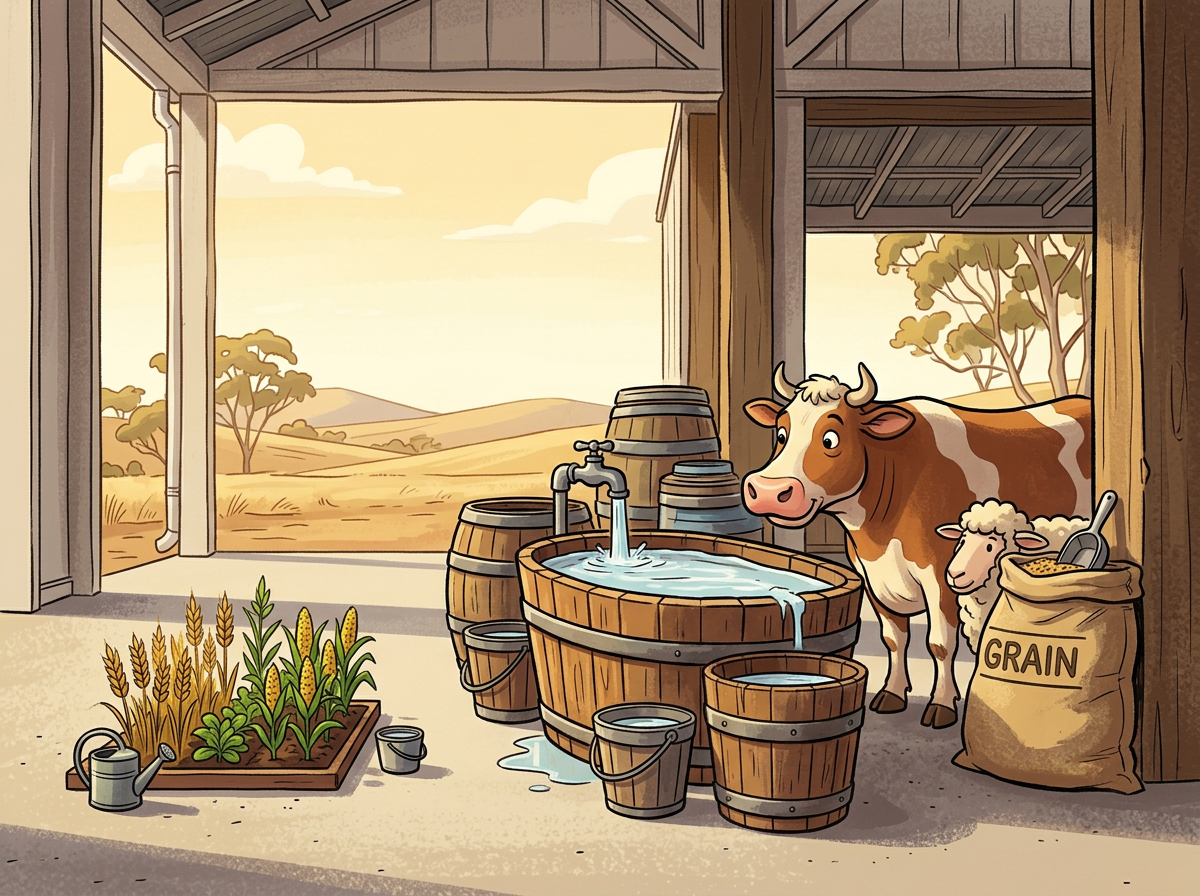
Livestock and their feed are the single biggest draw on Australia's water.
Water use by sheep, cows and the grain grown to feed them rose 191% in one year alone to 2,917 gigalitres, making livestock production the largest and fastest-growing water user within an agriculture sector that already consumes 72% of the nation's total water.
Source: Water Account, Australia 2020–21, Australian Bureau of Statistics.
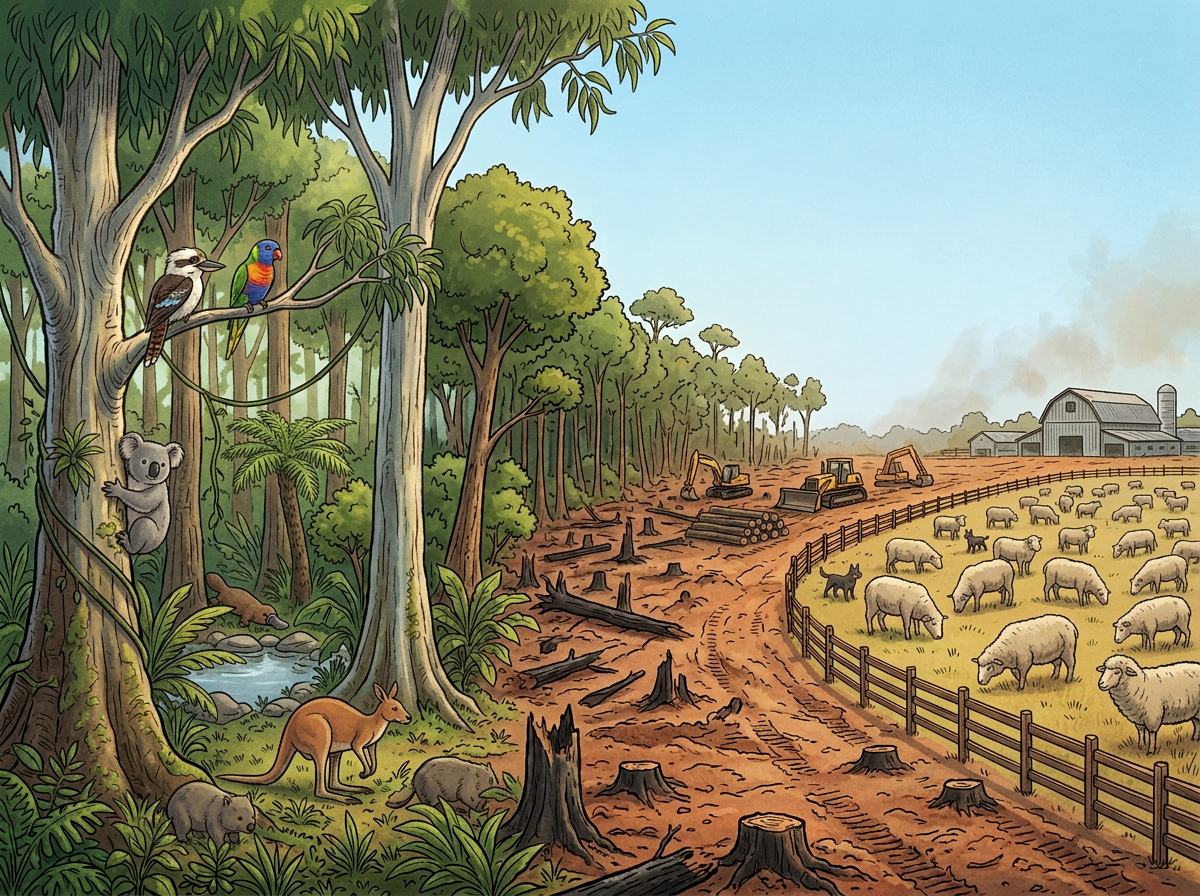
In Queensland, 85% of native bushland cleared is to grow more meat.
Queensland accounts for the majority of Australia's land clearing, and the state's own monitoring data shows that in 2019–20, 85% of all clearing recorded was to create new pasture for cows and sheep, destroying wildlife habitat in the process.
Source: Queensland Government, SLATS 2019–20 Report - Key Findings, Statewide Landcover and Trees Study.
Livestock digestion alone drives almost three-quarters of Australia's farm emissions.
Methane, belched by cows and sheep as they digest food, makes up 71.9% of the entire agriculture sector's emissions, dwarfing every crop-related source combined.
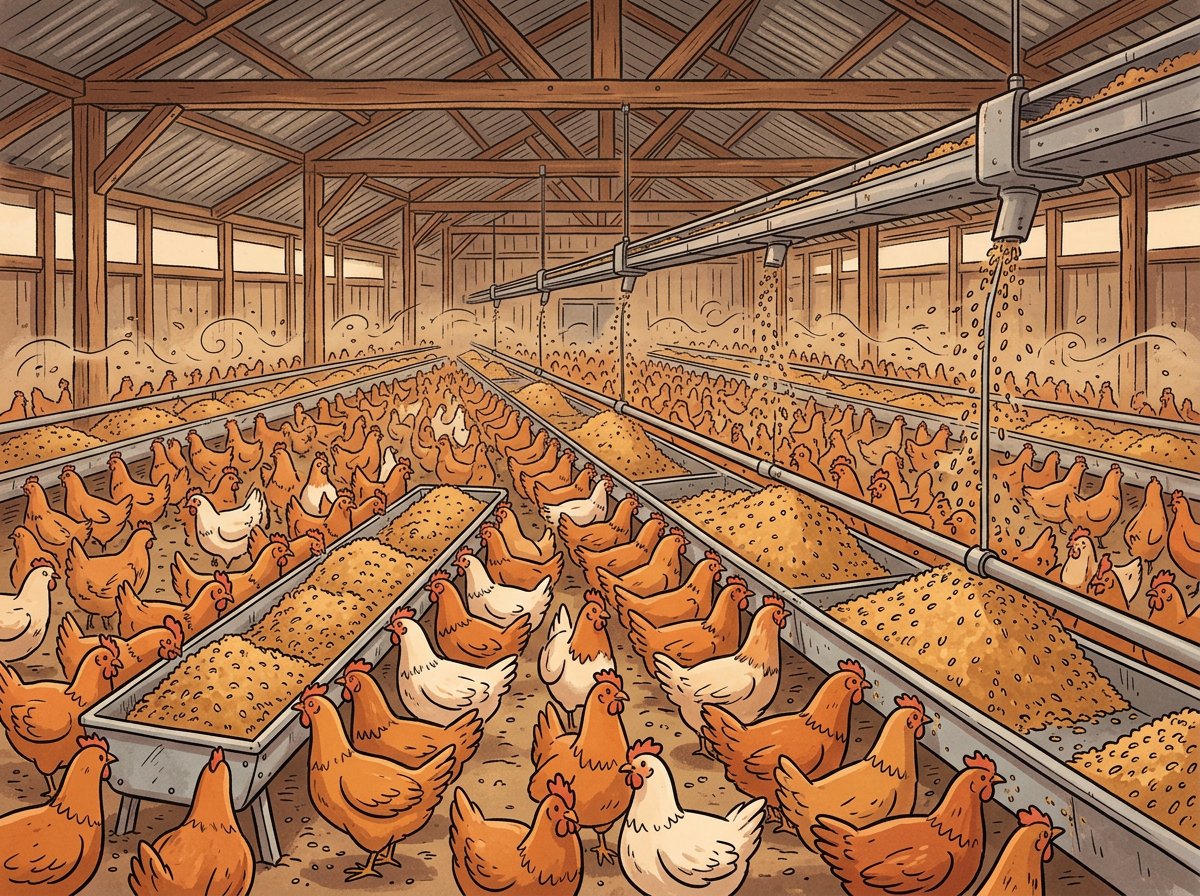
Almost half of Australian chicken's carbon footprint comes from land being cleared on another continent to grow its feed.
Land clearing linked to imported South American soymeal, used in chicken feed, adds 1.7–1.8 kg CO2-e to every kg of Australian chicken meat produced. That means close to half the climate damage behind an Aussie chicken wing comes not from raising the bird, but from forest being cleared overseas to grow what it eats.
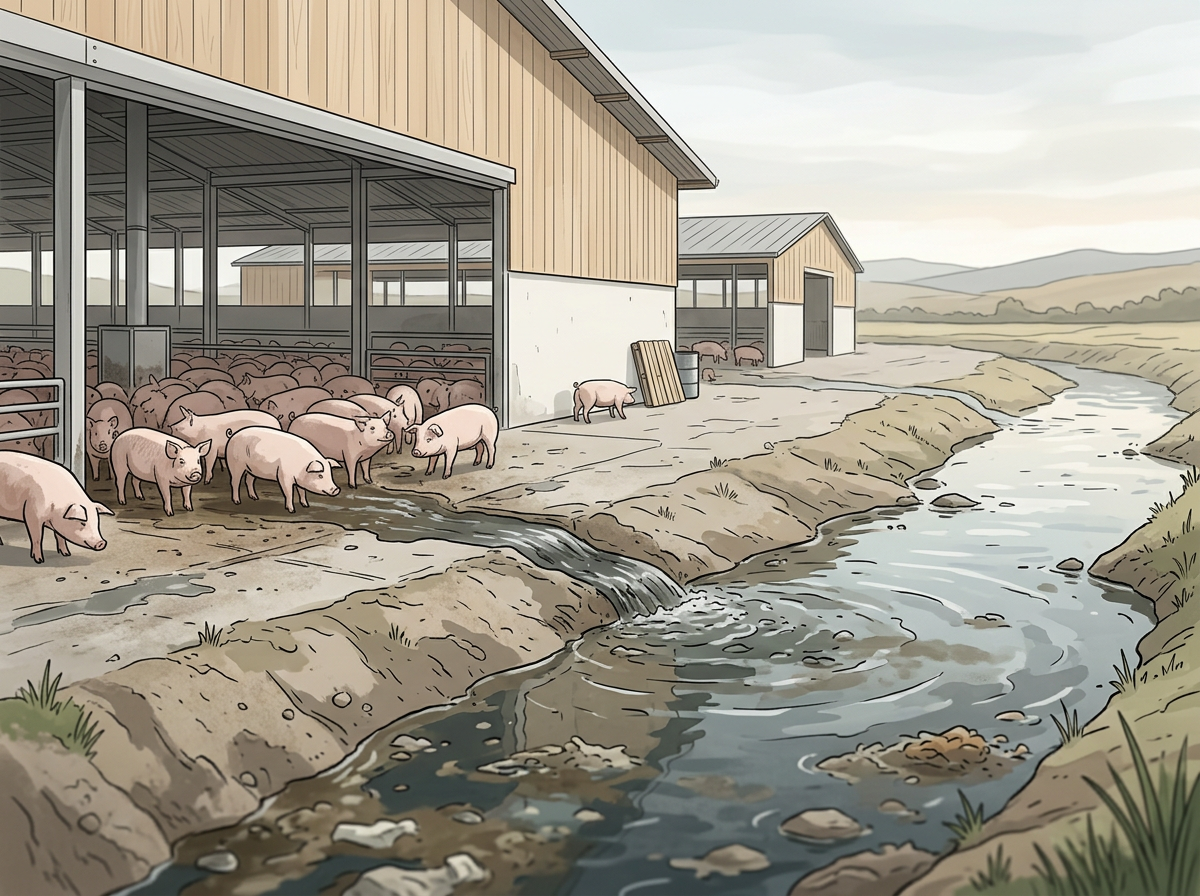
Pollution from pork production running into Australian waterways rose by a third in just two years.
Nitrogen and phosphorus losses from pig manure that run off into waterways has been shown to fuel algal blooms and is starving aquatic ecosystems of oxygen.
Sounds bad, right?
That might be so, but our everyday decisions shape the kind of world that we want to live in. We can either contribute to an unhealthy planet, or chip away at improving things, every time we take a bite.